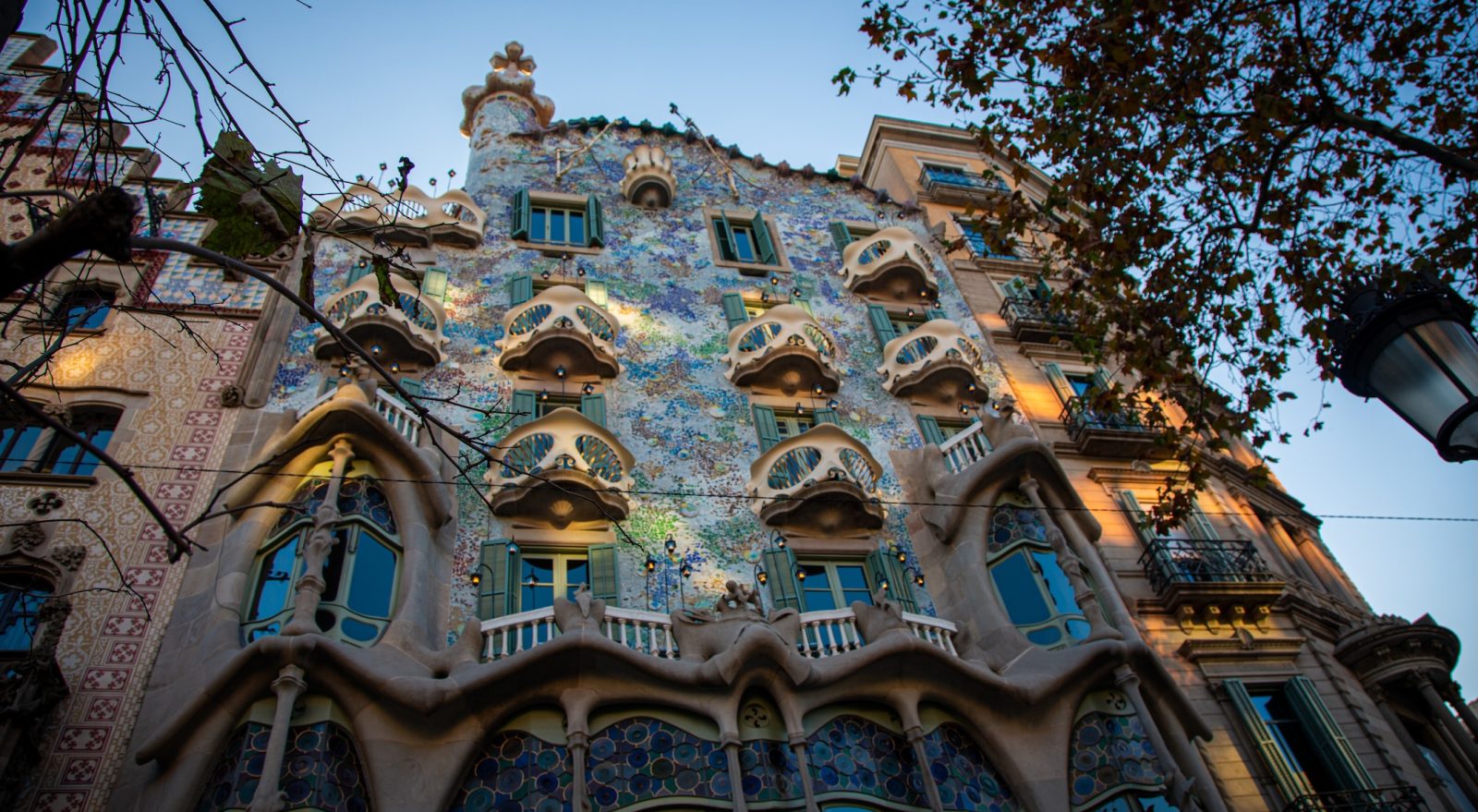
 Casa Batlló ©Turisme de Barcelon
 A year ago, Barcelona’s approach to conference legacy centred on a single proof of concept: ECTRIMS 2025 showed that a congress could leave the city with more than delegate spend, provided the Barcelona Convention Bureau built impact from the start rather than bolting it on afterwards. In 2026, the same methodology has been run six times over so far, across a portfolio of congresses that share almost nothing in subject matter… which turns out to be the point!
Liver disease, respiratory health, neuroscience and, for the first time, signal processing and artificial intelligence have each had their own legacy project this year, each shaped by the Bureau to fit the science on the agenda and the community around the venue. The throughline is the method: take what a congress already knows, and hand a version of it to the people who live in the city hosting it.
Two health congresses, two public campaigns
EASL’s Love Your Liver campaign ran a public health village alongside the congress itself, offering free liver scans to more than 500 members of the public and viral hepatitis C tests to a further 60-plus, many of whom, post-scan surveys found, had little to no prior awareness of their own liver health, and left motivated to change their diet or activity levels.
Sixteen volunteer hepatologists, including EASL’s Dr Sabela Lens, also took the campaign into ten schools across Barcelona and Catalunya, reaching more than 700 students aged 10 to 15 with ultrasound demonstrations and a specially developed comic book, published in English, Spanish and Catalan, aimed at nine-to-eleven-year-olds.
Months later, the European Respiratory Society’s Healthy Lungs for Life campaign took a similar approach to a different organ: a public event in the city centre offered 285 spirometry tests and 210 CheckAir assessments, run with local volunteers and the Lovexair Foundation, with a school programme following in October.
Neuroscience goes citywide
FENS Forum 2026, Europe’s largest neuroscience meeting and a record-breaking edition for the Spanish Society of Neuroscience as host, took the widest public footprint of any of this year’s projects.
Rather than concentrating activity around congress week, it spent months turning Barcelona into what organisers describe as a neuroscience hub: the city’s annual Science Festival drew an estimated 22,000 attendees, 630 of whom took part directly at its dedicated Neurolab; the Escolab programme brought neuroscience to 60 schoolchildren during Brain Week; and more than 15 public talks, including one delivered by 2014 Nobel laureate Edvard Moser, reached over 2,200 citizens in the months before the congress opened.
Why ICASSP is the one to watch
Of the six, ICASSP is the outlier, and Barcelona is treating it that way. As the world’s leading conference on signal processing, speech, audio and applied AI, it had no obvious public-health hook to build a legacy project around, so the Bureau built one from the city’s own urban challenges instead. Working with the CTTC (Centre Tecnològic de Telecomunicacions de Catalunya) and Barcelona-based PCO Grupo RIC, the project turned the conference’s core expertise on air quality and noise pollution into a citizen-science initiative called Conscious Walks: predefined routes through the city, fitted with sensors to measure noise and air pollution, walked by both local residents and congress delegates, with the data feeding directly into the CTTC’s public OpenData Dashboard.
Thirty-eight people took part in the walks themselves, and on 6 May the conference opened its doors to 22 students from a technological baccalaureate programme for a masterclass from Universitat Politècnica de Catalunya professors and a demonstration of a collision-prevention application built on the same signal-processing principles discussed on the congress floor.
The numbers are modest next to the health campaigns’ public reach, but the legacy is designed to outlast the week regardless: one running route and four walking routes, complete with audio explanations of the surrounding environment, are staying in place, and the sensors used during the project remain in the city for future use.
That distinction matters to how Barcelona frames its wider legacy ambitions, particularly around sustainability. A liver scan or a lung test delivers an immediate, personal result; a permanent sensor network and a set of public walking routes deliver something closer to civic infrastructure, the kind of outcome a destination can point to years after a congress has left town.
As Christoph Tessmar, Director of Barcelona Convention Bureau, concludes: “What this year shows is that Barcelona Convention Bureau’s Legacy Program has moved beyond proving that congresses can have a positive impact in the destination: it is now testing how far this model can adapt to the different nature of the events held in the city. We will continue taking the knowledge, talent and networks that congresses bring to Barcelona and turning them into initiatives that positively impact our community.”
For more information on how to organise an impactful congress in Barcelona, visit this website or contact [email protected].