WBCSD is a CEO-led organisation of more than 200 global companies working to accelerate sustainable business transformation across value chains, with the stated ambition of helping more than 9 billion people live within planetary boundaries by 2050. “We bring together over 200 global companies from around the world, from different geographies, representing trillions in cumulative revenue,” explains Irge Olga Aujouannet, WBCSD’s Senior Director of Events and Operations. “What makes us really unique is that we are cross value chain. We are not a sector organisation.”
One Meeting Instead of Two
For most of its history, WBCSD ran two separate flagship gatherings: a technical meeting bringing together sustainability specialists to co-create solutions, and a more senior CEO-level meeting focused on strategic alignment. From 2026 onward, the two have merged into a single Annual Meeting – a shift Aujouannet ties directly to how sustainability itself has moved inside member companies.
“Sustainability is increasingly becoming integrated in different functions within the company,” she says. “It’s no longer only relevant for the Chief Sustainability Officer… it’s about integrating sustainability in the decision-making process and operations of the company.” Increasing physical risks related to climate change, supply chain resilience, and tightening regulatory frameworks put sustainability on the agenda of the Boards, with the C-suite now becoming part of a conversation once reserved for specialists, which is why the new format runs executive, practitioner, and deep-dive tracks side by side.
There’s a quieter logic behind the merger too. “We wanted to combine our two large conferences to reduce our environmental impact while offering a platform that brought the right people together” Aujouannet notes.
A Destination Delegates Actually Vote For
The obvious question is why Montreux, specifically, keeps winning that slot. Aujouannet points to data rather than sentiment: “We actually ran a survey last year. More than 60% of our delegates who joined the meeting voted to come back to Montreux.”
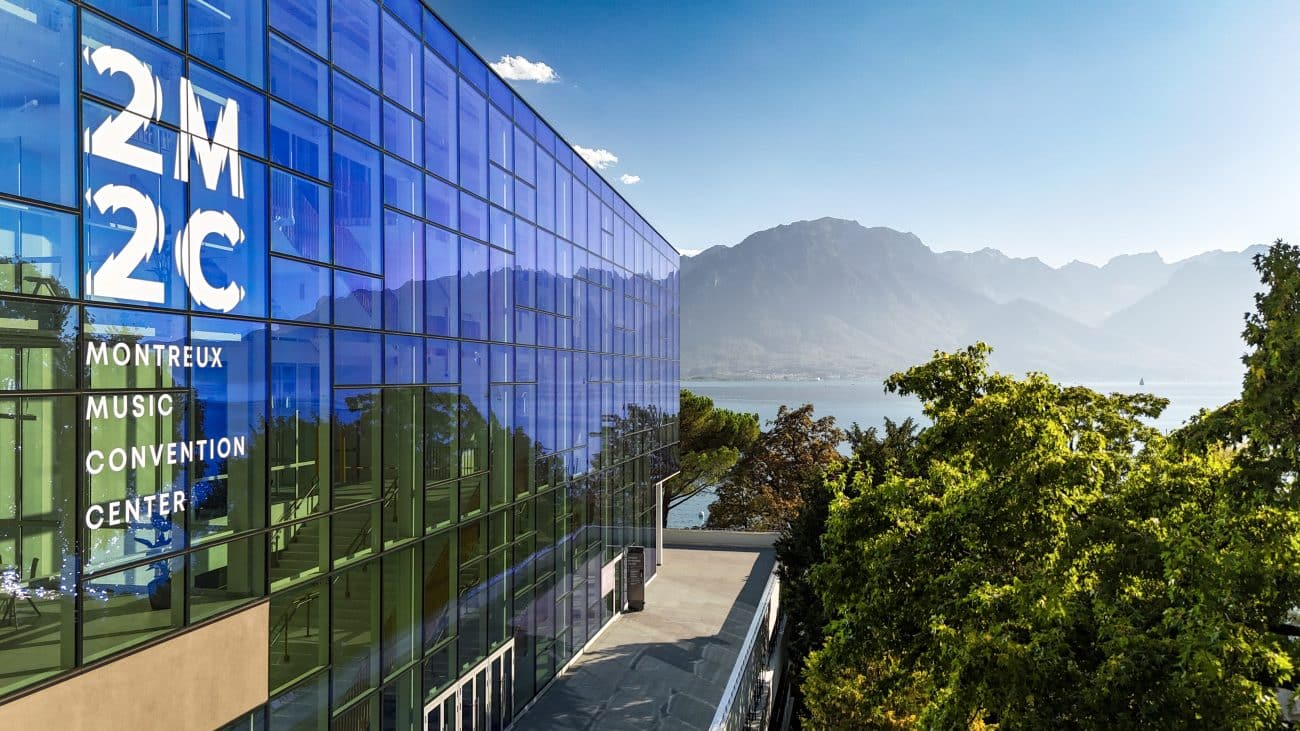
Scale plays a role: WBCSD’s gatherings run to 600-700 people on peak days, narrowing the realistic options to either sprawling international convention centres or something more intimate. “Montreux offers all the benefits and infrastructure associated with a modern convention centre in a cozy atmosphere surrounded by vibrant nature. It’s a better fit for the community spirit and proximity we are looking for” and, as she puts it, “with the lake on one side, and mountains on the other, it’s a real immersion into nature that’s hard to replicate elsewhere”.
Sustainability Credentials to Match the Mission
That immersion now comes with paperwork to back it up. The renovated 2M2C holds ISO 20121 certification, the international standard for sustainable event management, as well as the Vaud Ambassadeur label. It has also been awarded Swisstainable Level III, the top tier of Switzerland Tourism’s three-level sustainability programme.
WBCSD’s own practices reach beyond the environmental checklist, too. Alongside strict guidelines on single-use plastics, local and seasonal food, and vegetarian-first catering, Aujouannet is clear that the social dimension carries equal weight: working with local suppliers who pay fair wages and offer decent working conditions to their staff, wherever an event lands. “Supporting local businesses and the communities to which they belong is a critical component of our event strategy.”
In Montreux, that translates into sourcing wine from neighbouring vineyards, working directly with local farmers, and running field trips that expose delegates to local agricultural practices. In short: deliberately using WBCSD’s buying power to support the community hosting it, not just to lower its own footprint.
Writing the Next Chapter
Ahead of 2027, Lausanne Montreux Congress (LMC) proposed a set of Sustainable Experience and Legacy ideas, from local field visits to youth hackathons with regional academic institutions. Aujouannet confirms discussions are ongoing but nothing is locked in: “We are very much still in the exploration phase,” partly because WBCSD is mid-way through a broader strategy update that will influence the programming for its Annual Meeting.
What is locked in is the relationship itself: Aujouannet will formally join LMC’s Ambassador programme this November. For her, a Swiss, it’s less formality than natural extension. “I’m very passionate about Switzerland. I love my country… we are extremely lucky to be living in a country where we have all the benefits of nature at proximity.”
She points to Montreux, Vevey, and Lausanne as places that “set the example in the way they design and build their cities… in respect of nature and also the local communities,” even while acknowledging the trade-off: “things take a lot of time because we are a real democracy… but ultimately it’s a great way of working, because it’s really about people doing things for the people.”
More information on Montreux as a conference destination:
More information on Switzerland as a convention destination: [email protected] / www.MySwitzerland.com/meetings