 @This is Barcelona
 Launched in early 2025, the Barcelona Convention Bureau Legacy Program was designed to generate long-term value in the territory through the congresses and events hosted in the city. Its first-year results already indicate a specific methodology rather than isolated initiatives. Five events generated positive local impact, 15 collaborations were established with local partners, more than 650 community members and 58 students took part in related actions, two long-term projects were created, and four existing local initiatives were brought into international congress settings.
The ECTRIMS 2025 case is one of the clearest examples of that approach. Held in Barcelona from 24 to 26 September 2025, the congress of the European Committee for Treatment and Research in Multiple Sclerosis brought together more than 9,600 international researchers, clinicians and healthcare professionals working on multiple sclerosis and related conditions. Yet the real interest of the meeting lies not only in the scientific programme but in what Barcelona and its partners built around it.
The legacy strategy responded to two very specific challenges. The first was how to bring the congress’s scientific advances closer to patients and encourage them to play an active role in shaping the research that affects their future. The second was how to address stigma in the workplace and improve awareness of the professional capabilities of people living with MS, particularly given the low employment rates associated with the condition.
Extending the scientific conversation to patients
The first strand built on an existing ECTRIMS initiative. The ECTRIMS Patient Community platform operates year-round, connecting people living with MS and related neurological conditions with reliable, up-to-date scientific information. It positions itself as a bridge between the scientific community and the wider MS community, extending the reach of congress knowledge beyond the venue and into everyday life. The platform works with more than 40 patient advocacy organisations worldwide, underlining the scale of the ecosystem already surrounding the initiative.
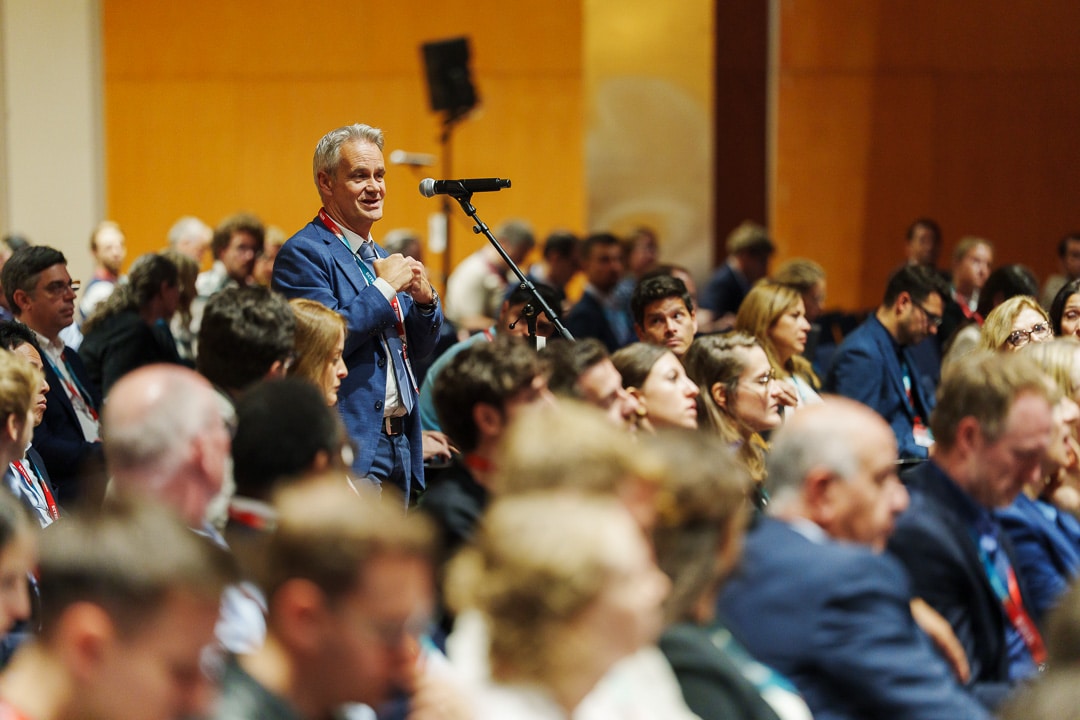
Within that framework, the fourth edition of Patient Community Day was held on the final day of the Barcelona congress, both in person and online. Sessions covered diagnosis, emerging therapies, rehabilitation, lifestyle strategies, nursing support and a series of research hot topics, including biomarkers, cognition, genetics, imaging and artificial intelligence. The format also created space for lived experience, allowing patients to put questions directly to specialists and contribute perspectives of their own.
The scale of participation shows why this was important. According to the legacy project summary, 320 people attended on site and 2,063 joined online. ECTRIMS subsequently published a Patient Community Day impact report, extending the educational value of the event beyond a single day and reinforcing the idea that informed patients are part of the conversation around scientific progress.
As ECTRIMS President Bruno Stankoff explains, the organisation’s mission extends well beyond its flagship congress: “Over the past four years we have established a Patient Community Day, where we share the latest insights from the research presented at the congress with the patient community. It creates a space where patients, patient organisation representatives, clinicians and researchers can come together, exchange views, and stay focused on what ultimately matters most: advancing research that makes a real difference for patients.”


Turning congress relevance into local action
Barcelona Convention Bureau, however, did not stop at supporting an established patient-facing initiative. It sought to create something rooted more firmly in the city’s own community.
That second strand took shape through collaboration with Fundació Esclerosi Múltiple, Esclerosis Múltiple España. Together, the partners developed an online training programme for Barcelona’s business community aimed at breaking down stigma around MS and helping employers build more inclusive workplaces.
Delivered through short modules, the design of the training includes guidance and tools for companies on recruitment, onboarding and the support of employees who are diagnosed after joining an organisation. It was presented on 13 November and made available via Barcelona Activa, the city’s local development agency, whose mission is to promote quality employment, entrepreneurship and business competitiveness within a sustainable and inclusive economic model. More than 40 people attended the launch session and received a guide on managing talent with MS.
A case study in destination-association alignment
That local talent was key to the project’s direction. Rosa Masriera, Executive Director of Fundació Esclerosi Múltiple, notes that there are 12,000 people living with MS in Catalonia and that many are only able to keep their jobs for around ten years after diagnosis. In that context, she sees the training as a way to connect the latest advances presented at ECTRIMS with practical change in Barcelona, giving companies accessible and reliable information so that inclusion is effective in day-to-day working life.
For Christoph Tessmar, Director of Barcelona Convention Bureau, this reflects a broader evolution in how hosted events are understood. “Events hosted in Barcelona are increasingly becoming drivers of long-term value rather than one-off activities,” he says. They contribute to knowledge exchange, community development and sector growth, while local organisations gain visibility and new partnerships.
The ECTRIMS 2025 legacy project demonstrates that legacy is most persuasive when it is specific, co-designed and capable of being tracked over time. Barcelona Convention Bureau and its local stakeholders now plan to monitor organisational uptake of the training and the changes local patients perceive in employment integration and workplace adaptation.
For more information on how to organise an impacful congress in Barcelona, contact [email protected]