Under the theme ‘Define Tomorrow, Act Today: Leading Together for Impact,’ discussions throughout the summit centred on a shared question: how can associations remain meaningful and effective when the political, technological, and societal environments around them are increasingly complex?
Leadership as co-creation
From the opening session, the tone was clear: leadership within associations is evolving. In his remarks, ESAE President Mohamed suggested that the traditional model of leadership for members is giving way to leadership with members.
“In practice, this means that associations must engage their communities more directly in shaping priorities, strategies, and solutions,” said Mezghani. “The emphasis is shifting toward co-creation, shared responsibility, and measurable impact.”
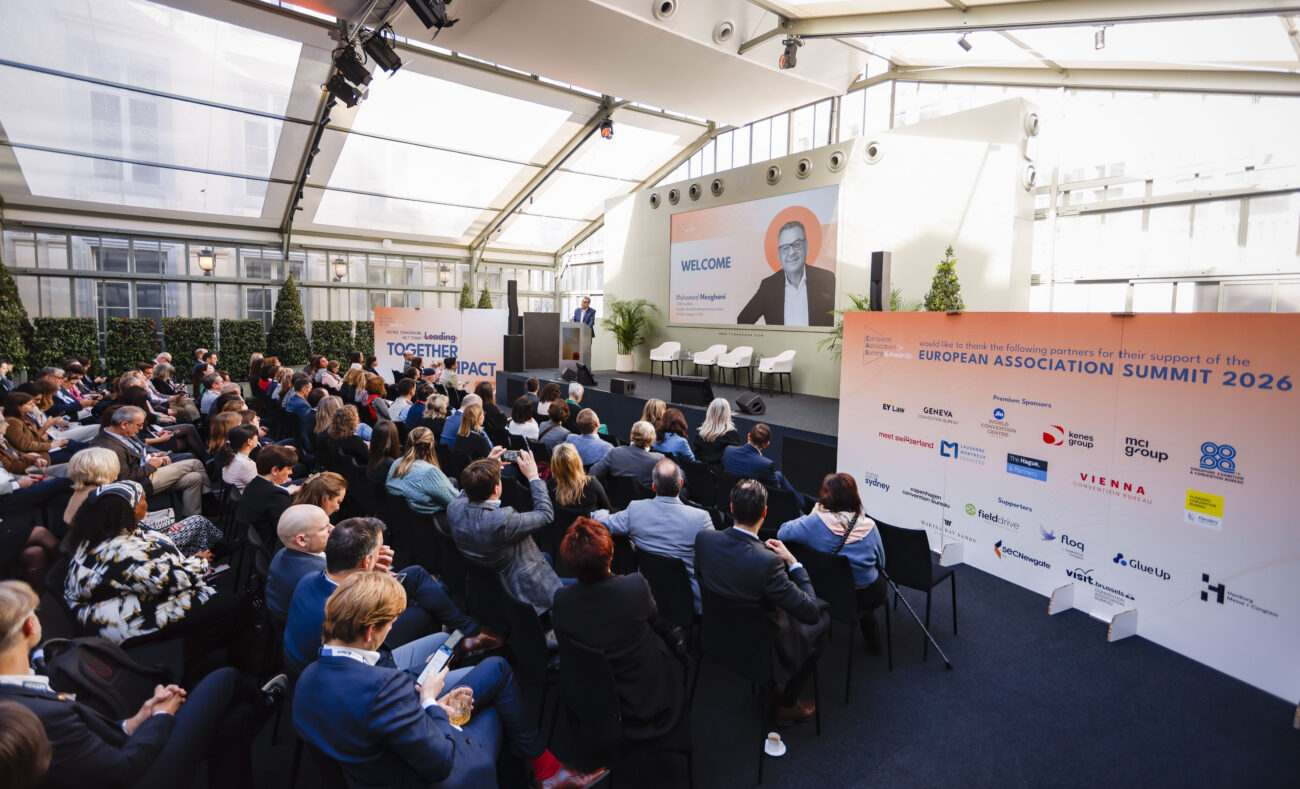
As speakers noted throughout the day, organisations can no longer assume that their relevance is self-evident; they must continuously demonstrate how they contribute to advancing professions, industries, and communities.
This question of impact framed many of the discussions that followed. Associations operate in an environment characterised by geopolitical tensions, technological disruption, and shifting stakeholder expectations. Navigating such complexity requires not only expertise but also new forms of collaboration and leadership.
Preparing for the future
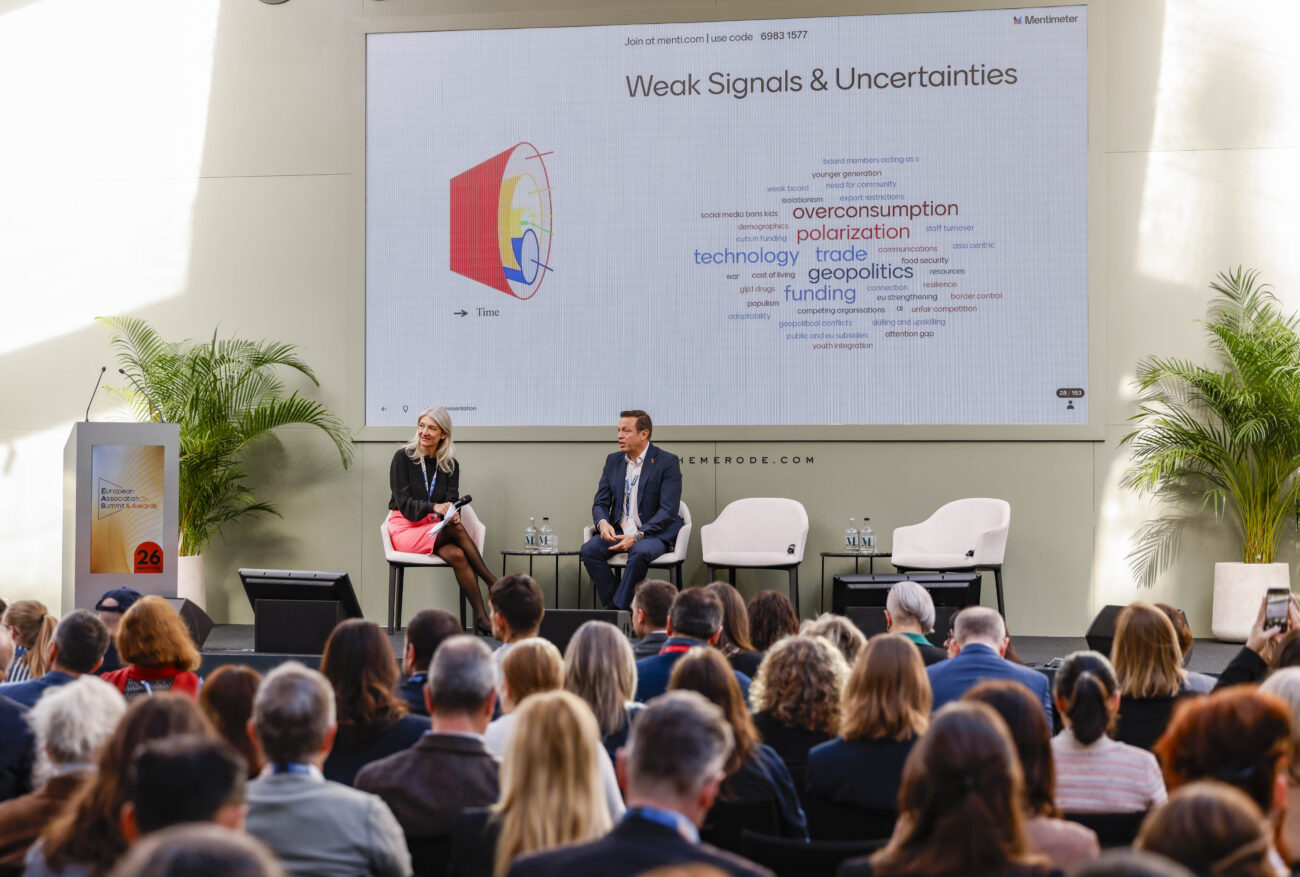
One of the morning’s central conversations focused on foresight, a concept often misunderstood as simple prediction. Instead, Epaminondas Christophilopoulos, UNESCO Chair on Futures Research described it as a structured way of thinking about the future: identifying signals, questioning assumptions, and preparing organisations to respond to multiple possible scenarios.
“The future does not arrive with huge headlines,” he observed during the session. “It arrives with whispers.” The discussion, then, revolved megatrends such as technological growth, climate pressure and changing work patterns to weak signals that might still seem marginal today but could reshape the environment tomorrow.
For associations, adopting a foresight mindset can help strengthen strategic planning. Rather than reacting to sudden disruptions, organisations can develop the capacity to anticipate change and respond with confidence.
The human dimension of transformation
While strategy and foresight dominated many discussions, the summit repeatedly returned to the human side of organisational change.
During the panel ‘The Human Factor: Leading People Through Change,’speakers explored a well-known challenge: change initiatives frequently fail not due to weaknesses in the strategy itself, but because people do not clearly understand the reasoning behind it, or feel sufficiently secure to adopt it.
Panelists identified several barriers that can slow transformation: fear of uncertainty, governance gaps, internal politics, and insufficient communication. Addressing these obstacles requires transparency, strong leadership, and an organisational culture that encourages learning and experimentation.
Recognising excellence in the sector
The summit concluded with the European Association Awards, celebrating initiatives that demonstrate innovation and impact across the sector.
The 2026 winners included:
+ DEI Award: International Society of Paediatric Oncology
+ Events Innovation Award: European Network of Living Labs
+ Digital Communication Award: European Hematology Association
+ Impact Award: European Travel Agents and Tour Operators Association
More on this very soon: each of these initiatives will be extensively featured in Boardroom in the coming weeks. Stay put.
The Summit was also an opportunity for ESAE to announce the relaunch, next year, of the Executive Master in International Associations Management, powered by Solvay Lifelong Learning, in Brussels. More on this very soon, too.
Artificial intelligence also surfaced repeatedly during the day’s discussions, though in a pragmatic rather than speculative way. As Ohri Lahrav, CEO of Kenes Group, suggested: “AI is prompting associations to rethink skills, business models, and the allocation of staff time, while also opening new opportunities for data analysis, member engagement, and operational efficiency.”


Collaboration as a strategic necessity
Another theme was the growing importance of coalitions and cross-sector collaboration.
Associations are increasingly expected to work beyond the boundaries of their own sectors. Many of today’s most pressing challenges, whether related to health, sustainability, technology, or regulation, require cooperation between diverse stakeholders, including policymakers, researchers, industry leaders, and civil society organisations.
At the same time, building such partnerships can be difficult. Competition for visibility, limited resources, and organisational silos can hinder collaboration even when objectives are aligned.
Yet, as Maria Fredin Gruber, Executive Director of the World Stroke Organization, noted: “Coalitions are becoming a strategic necessity. By working together, associations can amplify their voices, share expertise, and tackle complex issues more effectively.”
Governance, diversity, & resilience
The summit also addressed governance challenges facing association leaders. A roundtable on diversity, equity, and inclusion (DEI) examined how organisations can adapt their governance structures to reflect evolving societal expectations while maintaining effective decision-making.
Balancing diverse perspectives with strategic clarity is not always straightforward. Boards must represent a wide range of stakeholders, yet too many competing priorities can slow progress. Leaders therefore face the delicate task of ensuring representation while preserving agility.
Sessions focused on health associations and board-staff dynamics reinforced this broader theme: adaptability is becoming a defining capability. Whether responding to demographic change, scientific developments, or shifting member expectations, associations must continuously refine how they operate.

Associations as spaces of trust
If one idea connected the various discussions throughout the day, it was the enduring role of associations as spaces of trust and dialogue.
In an era marked by polarisation and fragmented public debate, associations remain among the few platforms where diverse stakeholders can gather to exchange knowledge, build consensus, and advance shared goals.
For many participants, this ability to convene communities across borders and disciplines remains one of the sector’s greatest strengths – and one that will only grow in importance as global challenges become more interconnected.
If the 2026 edition made one point clear, it is that the future of associations will depend on their ability to anticipate change, collaborate across boundaries, and continuously demonstrate their value to the communities they serve.