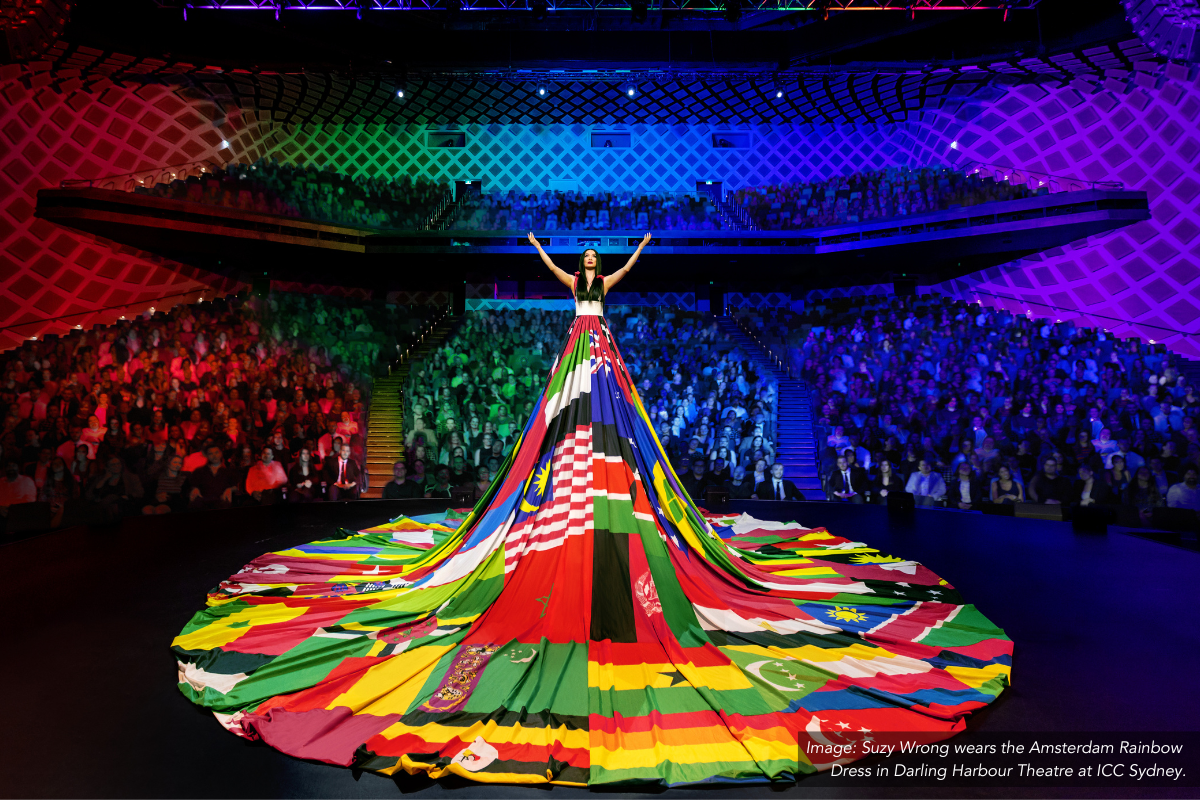
 ICC Sydney hosted World Pride in 2024
 As a senior executive, I believe that leadership is not only about strategy, growth, investment, and innovation. It is also about the kind of environments we help create, the cultures we nurture, the values we make visible, and the signals we send to the people who work with us, learn with us, research with us, and build with us.
That is why I believe visible support for Pride Month matters. For some, changing a logo, displaying a Pride flag, or making a public statement of support may appear symbolic. But symbols matter. They help shape whether people feel seen, respected, and safe to be themselves. In academic, research, and corporate environments, where relationships, trust, and credibility are central, these signals can make a real difference.
I write this not only as a business leader, but also as a gay man who has gone through the struggles, insecurities and worries. One of the realities many LGBTQIA+ people experience is that coming out is not a single event. It is something that can happen repeatedly, often quietly and unexpectedly, throughout professional life.
When meeting new colleagues, academic partners, researchers, investors, clients, executives, or board members, there can be a moment of calculation: Is this safe? Will this change how I am perceived? Will I be judged differently? Should I say something, avoid the topic, or edit part of myself out of the conversation? That repeated calculation adds a dimension of mental stress and worry that is often invisible to others. It can sit underneath otherwise ordinary professional interactions. It is not always dramatic, but it is real. And over time, it can be tiring.
It can also affect how openly people contribute. When part of your attention is spent managing how much of yourself to reveal, less energy is available for creativity, confidence, relationship-building, and leadership. In environments that depend on ideas, collaboration, and trust, this matters. Inclusion is not simply about kindness or representation; it is about allowing people to participate fully without carrying unnecessary additional weight.
This is particularly important across the communities I engage with. In associations, businesses, academia, research and entrepreneurship, people often move between cultures, institutions, countries, and professional networks. Each new setting can bring fresh uncertainty about whether LGBTQIA+ identity will be accepted, ignored, questioned, or quietly judged. Visible support cannot remove every barrier, but it can help set a tone before anyone has to ask whether they are welcome.
This is why visible allyship matters. When an organisation shows support for LGBTQIA+ people, it helps reduce that uncertainty. It says, clearly and simply: you are welcome here. You do not need to leave part of yourself at the door. You belong in this conversation, in this research community, in this boardroom, in this business environment.
However, visible support must be backed by action. Too often, Pride Month becomes a commercial exercise where organisations change the colours of their logos, publish a supportive message, and do little else. This risks becoming performative allyship: support that is driven more by brand perception, trend-following, or personal gain than by genuine commitment. Sometimes this is not intentional, but comes from a lack of understanding or deeper engagement with the cause. True allyship requires more. It means taking deliberate, practical steps to support, include, listen to, and stand with people who are underrepresented or unfairly treated. The aim should not be to appear inclusive, but to help create environments that genuinely are.
For academic institutions, this matters because learning and scholarship are strongest when people can participate fully. For research communities, it matters because discovery depends on openness, trust, and diverse perspectives. For associations and businesses, it matters because inclusive cultures are not just morally right; they are essential to leadership, innovation, and long-term success.
Using the Intersex-Inclusive Progress Pride Flag during Pride Month is one meaningful way to show that support. It reflects a contemporary and broad understanding of LGBTQIA+ inclusion, recognising not only lesbian, gay and bisexual people, but also trans people, intersex people, LGBTQIA+ people of colour, and those whose histories and experiences have too often been overlooked.
Of course, visible support should not be performative. It should be connected to genuine values, respectful behaviour, and inclusive practice throughout the year. But we should not dismiss symbolism simply because it is symbolic. A visible statement can be a starting point, a reassurance, and a reminder of the standards we want to uphold.
I see inclusion as part of responsible leadership. The association, academic, research and business communities all depend on human potential. That potential is strongest when people are not carrying unnecessary fear, self-editing, or uncertainty about whether they will be accepted. Pride Month gives us an opportunity to say, visibly and deliberately, that LGBTQIA+ people belong in every part of professional life: in classrooms, research teams, companies, investment conversations, leadership roles, and boardrooms.
That message still matters. And for many of us, it matters every day.