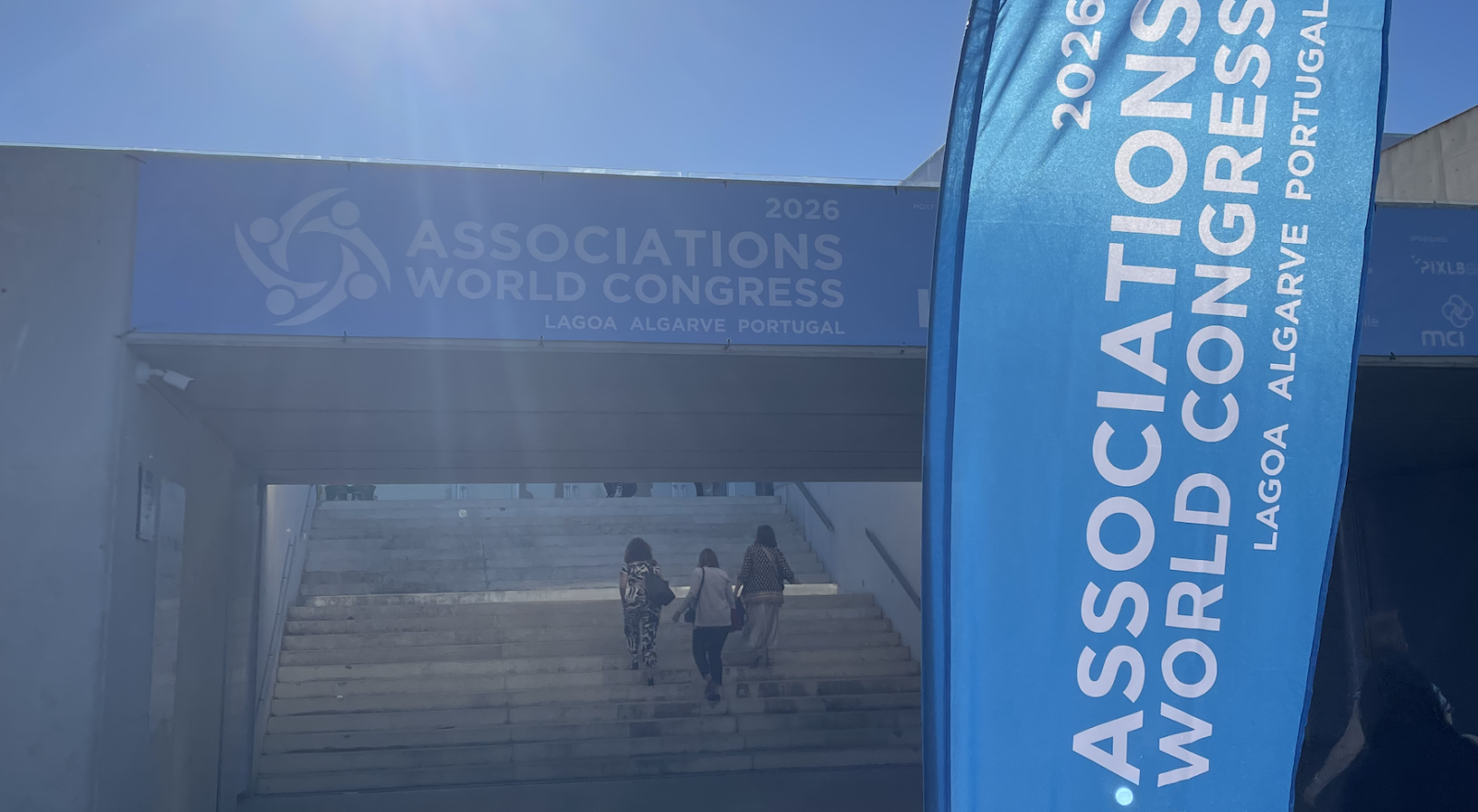
As official media partner, Boardroom was on the ground for the full run, and what emerged was less a conference than a controlled stress test: of governance models, digital strategies, and the increasingly uncomfortable relationship between association leadership and artificial intelligence.
When the Boardroom Becomes a Battlefield
Before the main congress even opened its doors, Sunday’s pre-congress sessions set the temperature for what was to follow. Two parallel tracks ran simultaneously at Tivoli: one a hands-on AI workflow lab, the other a closed-door boardroom simulation for medical associations.
Led by Simon Dufaur, European Head of Association Strategy & Development at MCI Group, the latter was framed deliberately as a confidential, healthcare-only exercise: a live boardroom stress test built around realistic crisis scenarios. Think sudden defunding, AI-generated congress abstracts undermining scientific integrity, geopolitical pressure on destination choices, or a data breach unfolding in real time during a flagship congress. The point was not to find solutions, but to discover, under time pressure and conflicting priorities, whether boards were actually asking the right questions fast enough.
“Most association boards are not underprepared because they lack intelligence or commitment. They are underprepared because they have never been forced to make a hard decision fast, with incomplete information, in front of people who disagree with them. That’s the only preparation that counts,” said Dufaur.
The slides on the screen told their own story. One asked participants to confront a hard truth: that many organisations continue to view geopolitics as backdrop rather than as a core decision-making factor, even as destination choices increasingly become public statements of values. Another drew a sharp distinction between what belongs to the board (risk appetite, ethical boundaries, escalation thresholds) and what belongs to management (incident coordination, vendor actions, communication execution). It sounds basic. In practice, the lines blur fast.
Dufaur pushed delegates through five questions every board should be able to answer before a crisis, not during one: Where are we too dependent? Which decisions would be hard for us to make quickly? How would stakeholders react if our hardest decision became public tomorrow? The session closed with a framework for building crisis muscle memory (pre-agreeing escalation triggers, mapping dependencies, stress-testing uncomfortable decisions before reality forces them) alongside a set of specific crisis questions tailored to medical association boards, notably the ones that management simply cannot answer alone.
The Main Event
Monday brought the full congress to life at the Lagoa Congress Centre, and the opening keynote made clear that the week’s central tension – between human connection and intelligent machines – was not going to be handled gently. Rui Maranhão Abreu, Senior Staff Software Engineer at Meta and one of the few speakers in this industry who can talk about community architecture from first principles, opened the plenary with a question that association leaders are only beginning to grapple with: what does it mean to build human connection in an age of intelligent machines?
His argument was not alarmist, rather careful actually. “The question isn’t whether AI will change how people belong to communities. It already has. The question is whether association leaders are going to shape that change, or simply absorb it.” he said. The keynote panel that followed, on the question of where associations create unique value in the age of AI, picked up that thread and ran with it, surfacing real decisions leaders are making now about knowledge curation, member trust, and what remains distinctively human about their organisations’ purpose.
The afternoon deepdives spread across four simultaneous tracks, ranging from Hans Gillior’s session on AI digital transformation and new revenue streams, to Edwina Mullins unpacking how AI is reshaping event marketing from audience targeting to real-time social amplification. Sergio Gallego Schmid of the Business Continuity Institute made the case for hybrid conferencing done properly – not the pandemic-era improvisation that many associations quietly abandoned, but a deliberate, profitable model built around genuine inclusion.
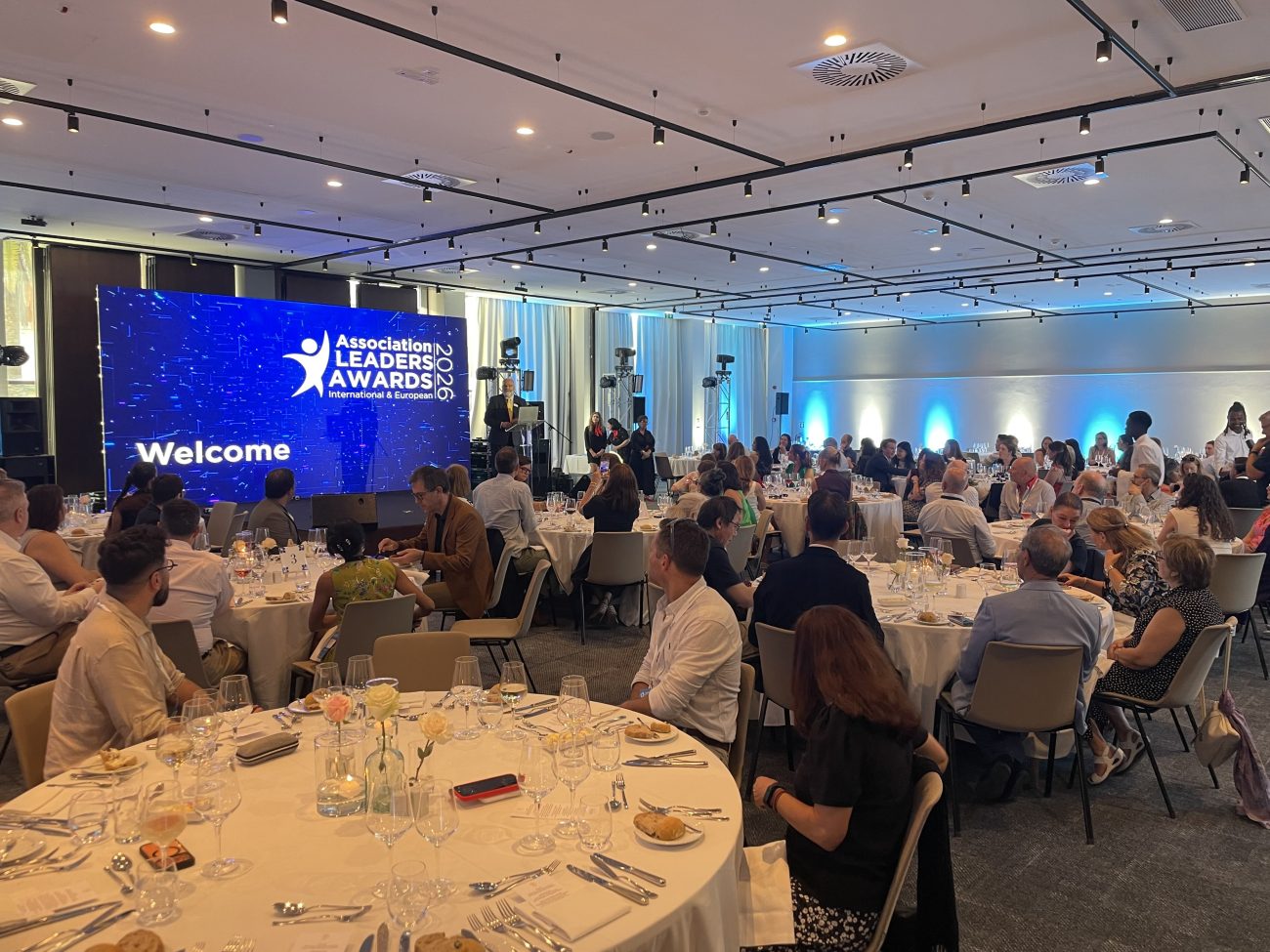
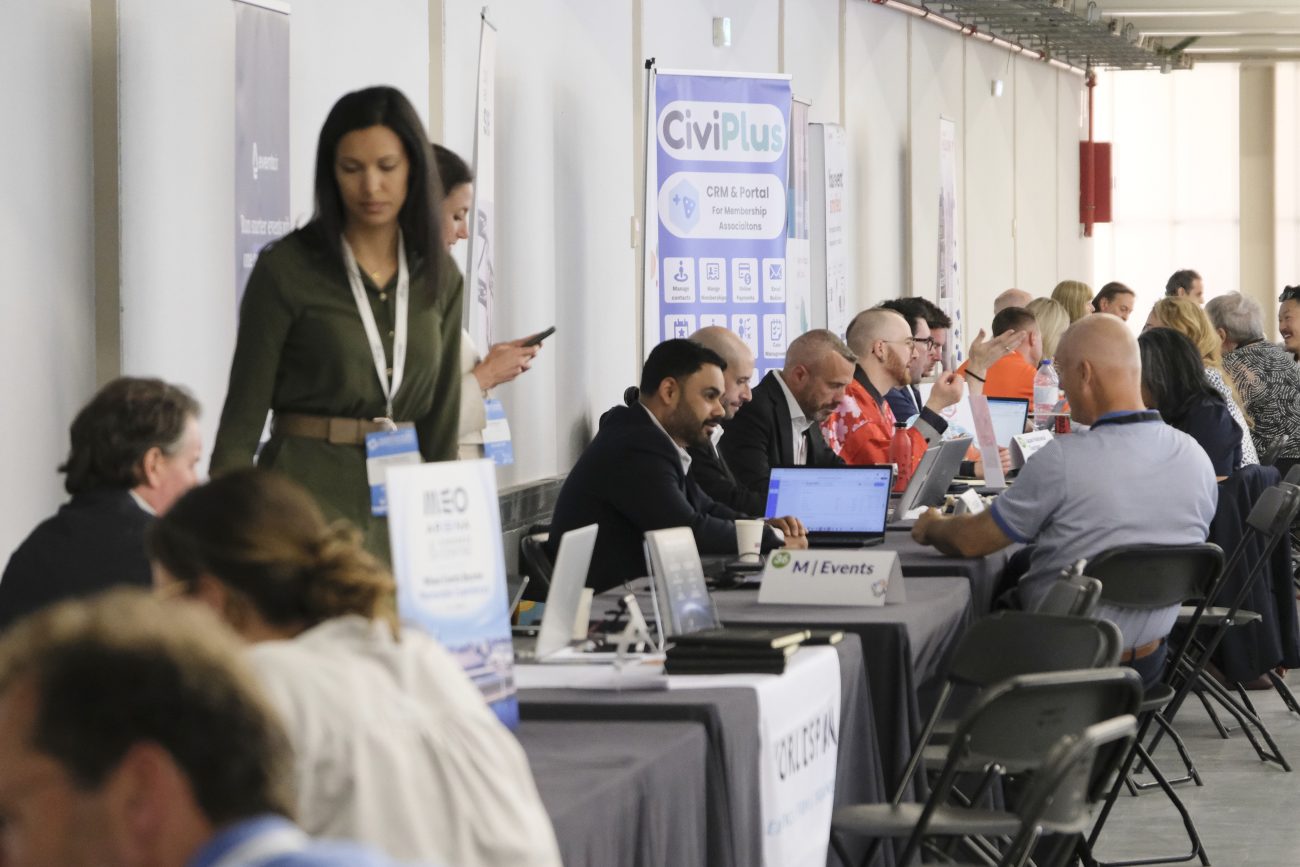
The Hard Questions… and Real Answers
Tuesday’s morning deepdives offered perhaps the most practically useful sessions of the congress. In the events operations track, George Walkley, an independent strategy consultant, led a three-and-a-half-hour session on authentic content creation with AI – a subject that has moved, as Walkley noted, “from speculative to unavoidable in the space of a few years.”
Three years on from ChatGPT’s first public launch, the session drew on the latest research and real-world association feedback to map where AI fits (and where it doesn’t!) in a credible content workflow. The central tension Walkley explored was between productivity and trust: “AI can generate faster, cheaper, and at higher volume, but associations trade on expertise and authority, and the moment members question whether content is genuine, that authority erodes.” His framework centred on human judgement as the non-negotiable constant: AI handles the throughput, editors and subject-matter experts handle the truth. The peer discussion that followed was notably candid, with delegates sharing their own experiments, failures, but also quiet successes.
The afternoon case studies brought the congress to some concrete and immediately applicable point. Kim Smeets, Senior Congress & Events Manager at the European Society of Cardiology, offered a masterclass in large-event evolution at scale – she runs two of the ESC’s big-scale conferences. Smeets walked through three interlocking areas of focus: designing for genuine delegate impact rather than inherited programme formats; building new revenue models through innovative partnership structures and onsite experience design; and ensuring that operational excellence doesn’t get sacrificed on the altar of innovation.
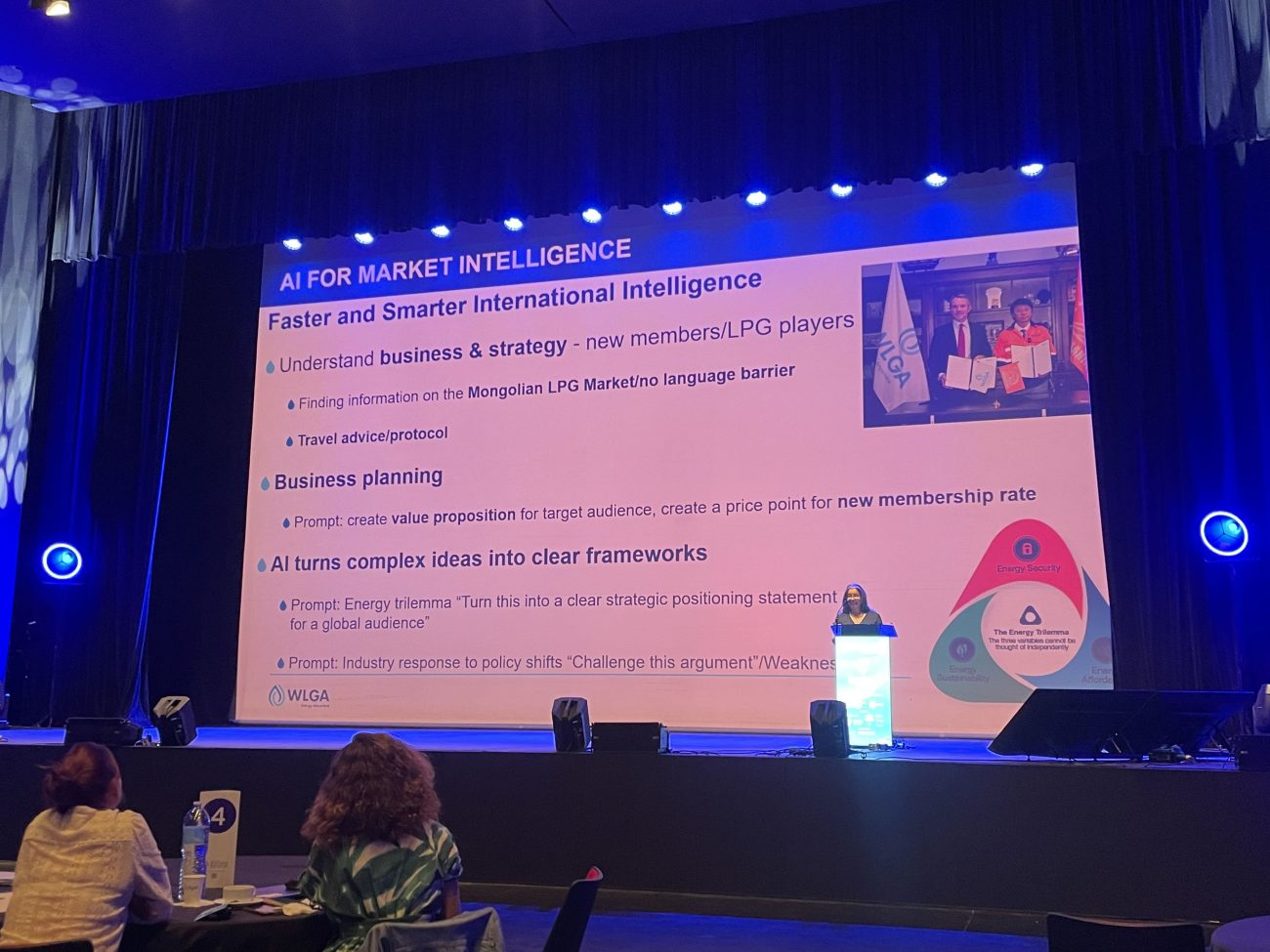
Melanie Milate-Maschino, Communications and Global Event Management at the World Liquid Gas Association, made the case for AI as a force multiplier for small association teams. Her session covered content creation and messaging optimisation, AI-driven audience targeting, personalised outreach, and the ambition to turn major events into what she described as “global media moments” through real-time social amplification. The thread running through her presentation was scale without headcount: a small communications team using AI tooling to punch well above its weight in reach and impact.
The congress closed with a keynote from Kristin Engvig, founder of the WIN Conference, on purpose, community, and the difference between building a network and building a movement: a fitting final note for a gathering that had spent three days wrestling with exactly that distinction.
As one participant told Boardroom at the end of conference: “These past three days were full of aha moments – not only for myself, but also for my association. I realise there are small, incremental steps that can be taken to become a better version of what we already are, and AI can help precisely with that. AWC was an eye-opener in many ways, combining big-picture thinking with concrete ideas I can implement when I return to the office. It’s exactly the kind of event that’s worth the time away from home.”
The next AWC will take place in June 2027, with the location to be announced in approximately two months. More information on the Association of Association Executives here.