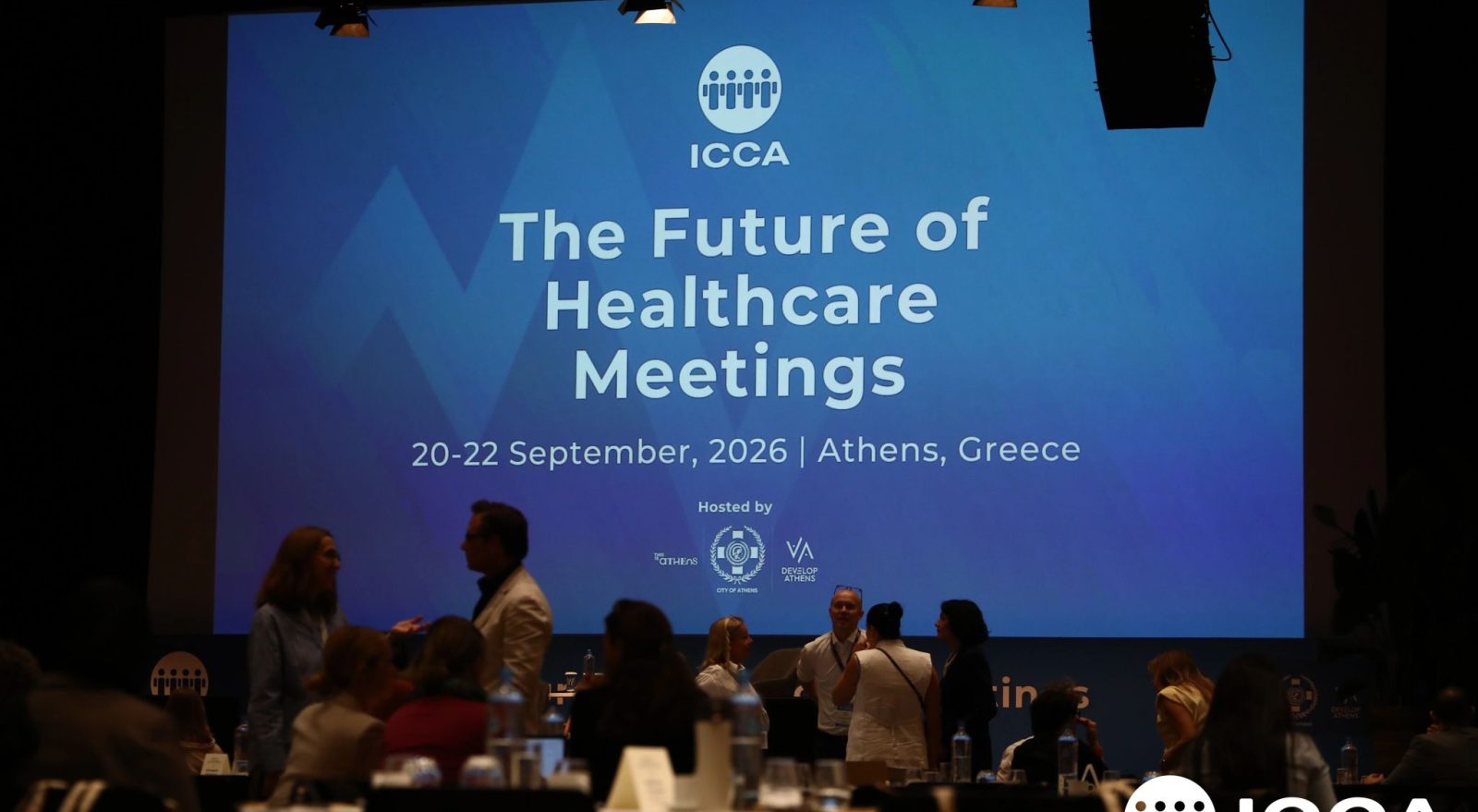
ECTRIMS, the Basel-based multiple sclerosis congress, set the tone. The 10,000-delegate event has built a standing AI and Innovation Committee, with a roadmap now running through its congress programme, certification courses and Patient Community Day.
Executive manager Antony Jean-Mertens traced it back to a chance connection at HLTH, the large healthcare innovation conference , with Aahuti Rai, Health Innovation Advisor & Executive, at Four Points Health. That relationship pulled in Amazon Health and Google, and forced governance questions early rather than after the fact.
Rai’s advice to other societies was blunt: “AI has to serve the mission, not the other way round,” while Jean-Mertens underscored “the role of startups in driving AI innovation and the importance of partnerships with local economic development agencies, innovation hubs, and technology clusters.” – the whole city ecosystem that allows for greater impact.
Money was the other throughline.
A panel on shared value – EASL’s Carina Schmidt, Congrex Switzerland’s Silvano Schaer, Landelijk Associatie Bureau’s Vivi de Regt, former IUHPE chief Liane Comeau, ExCel London’s Samantha Shamkh and Rotterdam Partners’ Eveline van der Pluijm – pushed back on the idea that big-name associations mean deep pockets. Schaer challenged that assumption directly.
Shamkh said venues are absorbing their own cost shocks, ie energy, staffing, etc., and need associations to say so plainly, not negotiate around it.
De Regt raised a sharper problem: venues holding dates with no real commitment behind them. Van der Pluijm’s fix was structural: destinations acting as connectors, pulling local stakeholders in to close gaps neither side can close alone.
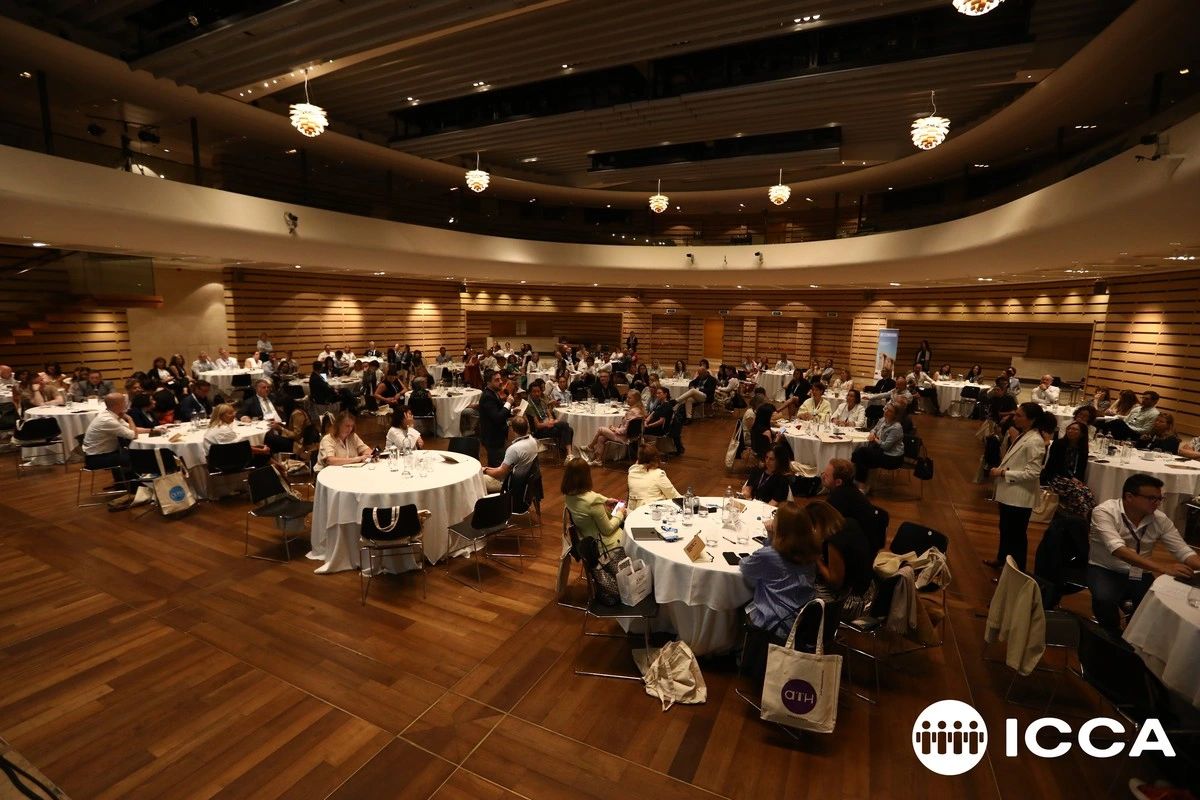
A separate session went further: retire “sponsorship” as a word. Moderated by Gainingedge’s Thomas Reiser, it brought together Francesco Agnesini, of the International EB Marketing Endoscopy Division, and Sissy Lignou, CEO of Athens-based PCO AFEA and President of IAPCO.
Their argument: healthcare meetings need to shift from transactional sponsorships to true partnerships, “co-creating with sponsors around shared goals to improve scientific and clinical outcomes,” as Lignou put it. She pointed to a record-breaking Athens case study as proof the model works in practice.
Compliance kept surfacing as the catch. Magdalena Machiela Bogatka’s warning, repeated across sessions: EU rules limit how far “partnership” can actually go once patients are in the room.
That landed hardest in a session on patient-centricity in rare-disease meetings.
SMA Europe’s Veronique Van Assche described building an accessibility guide covering physical, sensory and emotional needs, and a Florence conference where accessibility investment for a low-vision audience left permanent upgrades to the city itself.
The EMA’s Dimitrios Athanasiou and Duchenne Foundation’s Elvina Sakellariou agreed: patient groups need a seat at the table before the programme is built, not after.
Bogatka’s compliance line held here to: promotional and patient spaces have to stay legally separate, making local patient organisations and convention bureaux essential rather than optional.
The takeaway across all the sessions? Societies want AI and industry partners who understand their mission. Venues want honesty about who carries which costs. And patient groups want to be asked early.
The next edition of ICCA’s Future of Healthcare Meetings will take place in Poznań in 2027.