World-Leading in Reach & Reputation
In 2024, Vienna once again confirmed its standing among the elite of global meeting destinations. It secured the #1 position in the ICCA city ranking, hosting 154 international congresses – overtaking Lisbon and Singapore. In the UIA city ranking, Vienna held #2 globally, with 239 association meetings, coming just behind Brussels. These consistent high scores prove Vienna’s infrastructure and accessibility but also its capacity to repeatedly deliver for associations of all sizes and sectors.
Yet, rankings are only the surface. The deeper story lies in how Vienna uses its influence to shape events that go beyond their delegate base, transforming them into catalysts for social good, environmental awareness, and scientific progress.
Health Meets Environmental and Social Action: the ERA Congress
The 62nd European Renal Association (ERA) Congress, which took place in June 2025, brought together more than 9,000 participants in a hybrid format, serving both in-person delegates at the Austria Center Vienna and online attendees worldwide. Its scientific programme was complemented by a series of initiatives designed to ensure the congress left a lasting legacy.
In addition to aiming for Green Meeting certification under Austria’s Eco-label, ERA took steps such as using reusable materials, eco-friendly catering, and paperless communications. Travel sustainability was a core consideration: delegates were encouraged to arrive by train, and hotels with strong environmental credentials were prioritised.

ERA Congress 2025 ©Rafael Bittermann
A significant collaboration was ERA’s partnership with DonauCleanUp, a project focused on removing plastic waste from the Danube. The link to the congress’s theme, ‘Healthy Rivers, Healthy Kidneys’, was intentional, reinforcing the message that environmental and human health are interdependent.
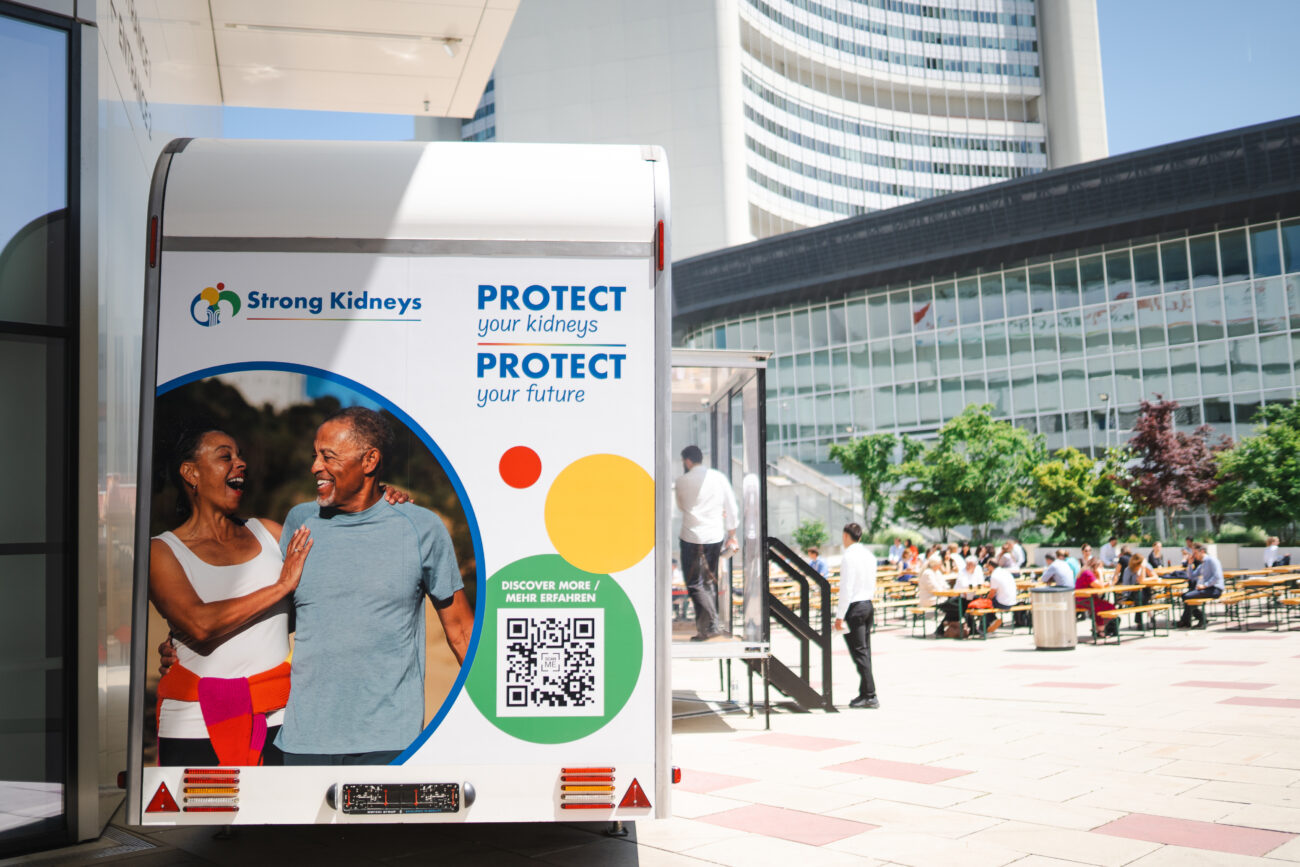
ERA’s outreach also extended into Vienna’s schools through the Kidney School initiative. Pupils not only learnt about kidney health but also contributed artwork, some of which was showcased during the congress and even on the cover of a leading nephrology journal. Furthermore, a mobile kidney screening truck was stationed outside the venue, providing free public health checks.
Science in the City: the ESA Living Planet Symposium
Why Vienna’s Legacy Model Works
Vienna’s success is based on a long-term understanding of the meetings industry’s evolving role. Associations today are under pressure to demonstrate the broader value of their gatherings to members, policymakers, sponsors, and the public.
Vienna offers the ecosystem to make that possible:
- Integrated public engagement: From public festivals to school outreach, events are encouraged to engage with local citizens.
- Sustainability infrastructure: Public transport is efficient, renewable energy use is high, and there is a strong local culture of environmental awareness.
- Financial and logistical support: Funds, venue flexibility, and an experienced local meetings community ensure that even ambitious legacy projects are achievable.
- Proven track record: High-profile examples like ERA and ESA prove that legacy is an active part of Vienna’s continuous engagement with associations.
Later in June 2025, Vienna welcomed the ESA Living Planet Symposium, which attracted more than 6,900 participants from 119 countries. While its core was deeply technical – covering Earth observation and satellite science – the event was equally committed to public engagement.
For three days, Karlsplatz transformed into a free open-air festival called Space in the City, curated and organised by UIV Urban Innovation Vienna GmbH and the Vienna Geospace Hub. The festival hosted interactive exhibits, virtual space mission experiences, artistic installations using satellite imagery, and even fashion inspired by Earth observation. The aim was to bring complex science to life for citizens of all ages.
In addition, 2,000 Austrian school kids had the unique opportunity to explore real-world applications of science and technology, sparking their curiosity and deepening their understanding of our planet during the LPS School Lab.


ESA Living Planet Symposium ©Rafael Bittermann
Sustainability was embedded at the ESA Living Planet Symposium too: reduced printed materials, eco-certified catering, and a focus on low-emission transport. The symposium also prioritised accessibility and inclusivity, with facilities such as on-site childcare, dedicated spaces for diversity and inclusion, and live subtitling. Once again Vienna demonstrated that science can and should be accessible to the communities that ultimately benefit from it.
“Events like the ERA Congress and the ESA Living Planet Symposium show how Vienna enables science to reach beyond expert circles. By linking cutting-edge research with public engagement and community projects, congresses here create legacies that are as visible in the city as they are valuable for the global scientific community,” concludes Anita Paic, Head of the Vienna Convention Bureau.
The Vienna Meeting Fund
Vienna’s commitment to legacy-driven events is reinforced by the Vienna Meeting Fund 2025–2028, a €4 million programme supporting international congresses that deliver both economic value and sustainable impact. Eligible events must run for at least two days in the city, attract half of their delegates from abroad, and take place in off-peak months such as January to April, July to August, or November to December.
The highest level of funding – up to €60 000 per event – is reserved for those achieving Austrian Ecolabel or ÖkoEvent certification, with lower amounts available for non-certified gatherings. This structure embeds sustainability as a core requirement, rather than an optional add-on. Applications are handled on a rolling basis, with organisers expected to acknowledge the support in their materials and submit delegate data after the event.
By targeting quieter periods in the calendar and rewarding certified green practices, the fund ensures that public investment translates into year-round visitor flows, measurable environmental gains, and tangible legacies for Vienna’s communities.
As Paic argues: “With the Vienna Meeting Fund, we not only support international organisers financially, but also incentivise them to adopt sustainable practices. This dual approach ensures that every funded congress strengthens Vienna’s position as a responsible and forward-looking meeting destination.”
For more information on Vienna visit meeting.vienna.info/en