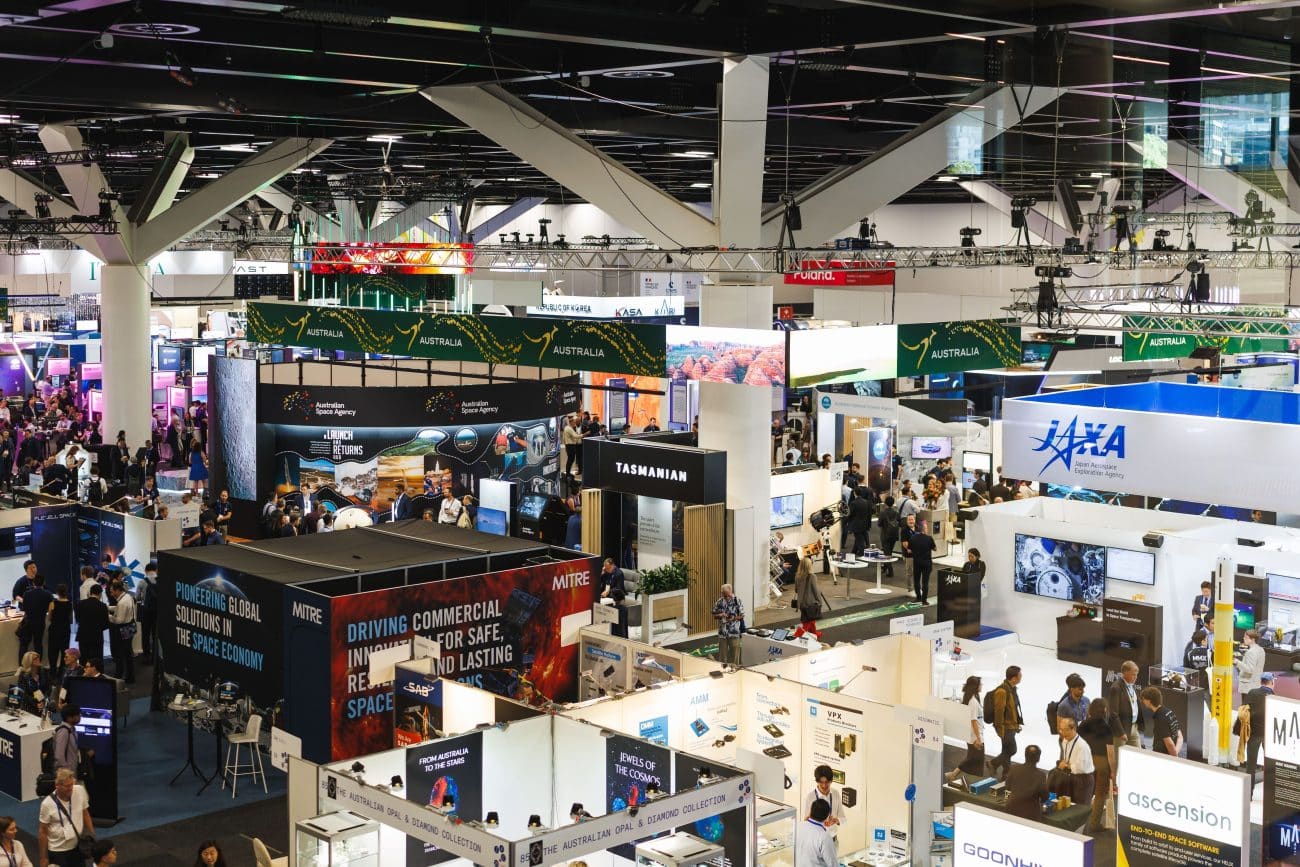
The event brought together 7,500-plus delegates from 99 countries, including more than 40 heads of international space agencies, alongside an exhibition featuring over 450 companies, institutions and governments across 19,000sqm. It also generated an estimated A$47 million for the local economy. What is most important is that the congress was won and delivered through a coalition that linked destination strategy, industry advocacy, national policy, venue capability and public engagement.
A bid rooted in Australia’s space ambitions
Sydney’s route to hosting IAC 2025 began in 2021, with a formal request for proposal released in March 2022. BESydney led the bid in collaboration with ICC Sydney, the Space Industry Association of Australia, the Australian Space Agency and Investment NSW, with support from Tourism Australia’s Business Events Bid Fund Program. The submission, made in April 2022, presented Sydney as a destination with accessibility, inclusion initiatives, a harbour-side precinct and a fast-growing space sector.
That alignment gave the bid operational credibility, but it also connected the congress to a national industry story. Australia had last hosted IAC in 2017; by 2025, the country counted more than 500 active space-related organisations. The congress therefore arrived at a moment when Australia could present itself not as an emerging spectator, but as a participant with capability to showcase and partnerships to deepen.
Adam Mather-Brown, Chief Executive Officer of ICC Sydney, linked the win directly to that partnership model, making it clear that the “collaboration reflected ICC Sydney’s unwavering commitment to innovation, operational excellence, and delivering events that inspire the next generation.”
A venue built around scientific exchange
IAC 2025 occupied ICC Sydney’s Exhibition and Convention Centres, including the Darling Harbour and Pyrmont Theatres, with a total footprint of over 135,000sqm across the event.
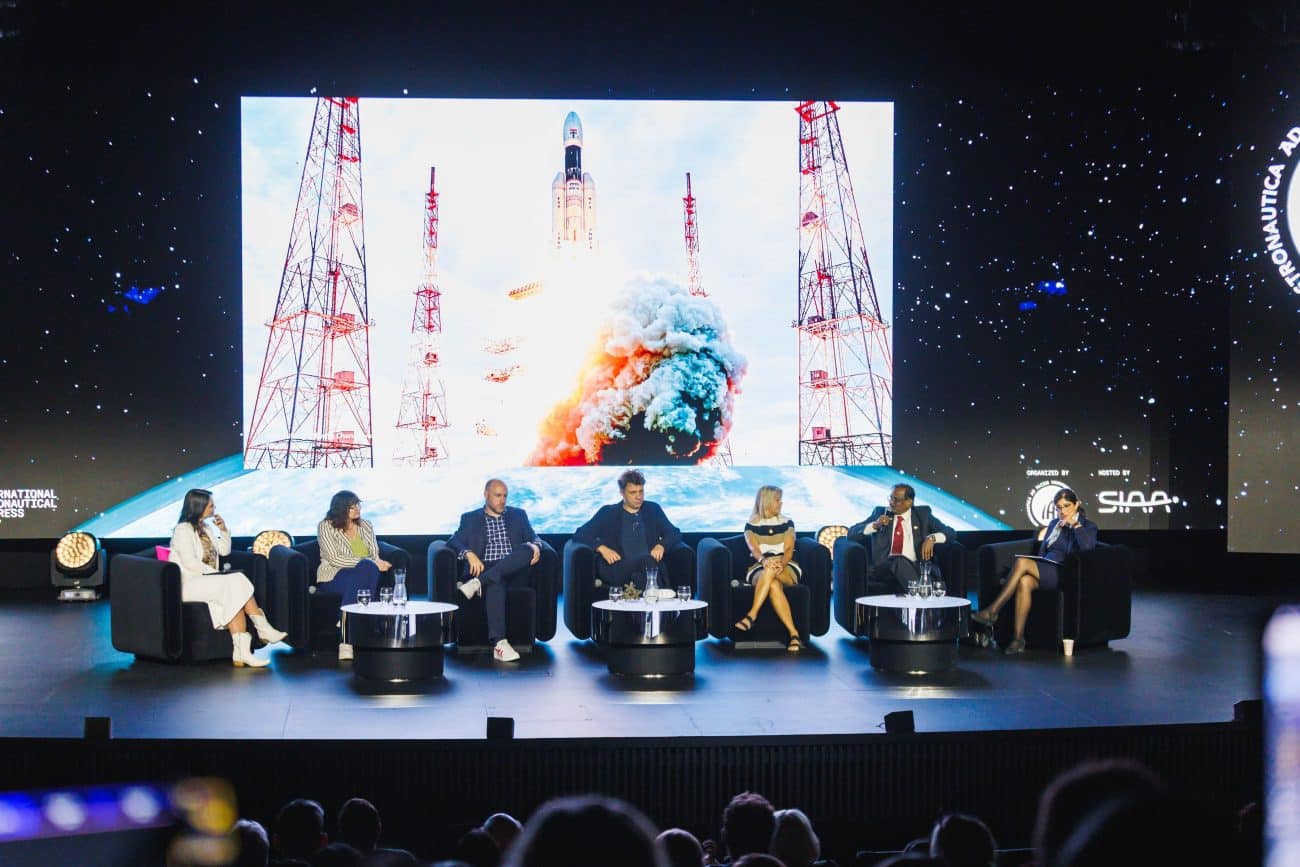
The programme demanded a high level of technical discipline. ICC Sydney supported more than 2,500 presentations through its Speaker Preparation Centre, while its in-house audiovisual team handled around 700 presentations per day and maintained brand consistency across more than 800 content pieces. Every LED screen across the Convention Centre, Exhibition Centre, TikTok Entertainment Centre (formerly ICC Sydney Theatre) and immersive LED Activation Zone was activated, extending the congress identity across the precinct.
Lisa Vitaris MBA GAICD CompIE Aust EngExec, Director of IAC 2025 Sydney at the Space Industry Association of Australia, described ICC Sydney’s audiovisual contribution as “the most expansive technical delivery in the history of the event”. She also pointed to the Speaker Preparation support and the integration of the congress creative across ICC Sydney’s digital infrastructure as “extremely technically impressive”.
©Camilo Hernandez – Snap Factory Productions
An exhibition with industrial & diplomatic weight
The exhibition gathered more than 450 companies, institutions and governments from around the world, including over 60 New South Wales businesses. More than 40 international space agencies were represented, among them NASA.
For a field shaped by government programmes, research partnerships, commercial supply chains and geopolitical interest, the exhibition floor carried strategic importance. It placed local companies next to global agencies and institutional players, giving NSW businesses visibility within an international marketplace. It also enabled policy, industry and research conversations to occur in the same physical environment.
The event’s delivery also included distinctive programme elements, from a Mission Operations Centre truck accommodated inside the Exhibition Centre to a live message transmission to the moon, supported by the Powerhouse Museum. These details helped translate the subject of the congress into visible, memorable experiences for delegates.
Public engagement with a talent pipeline
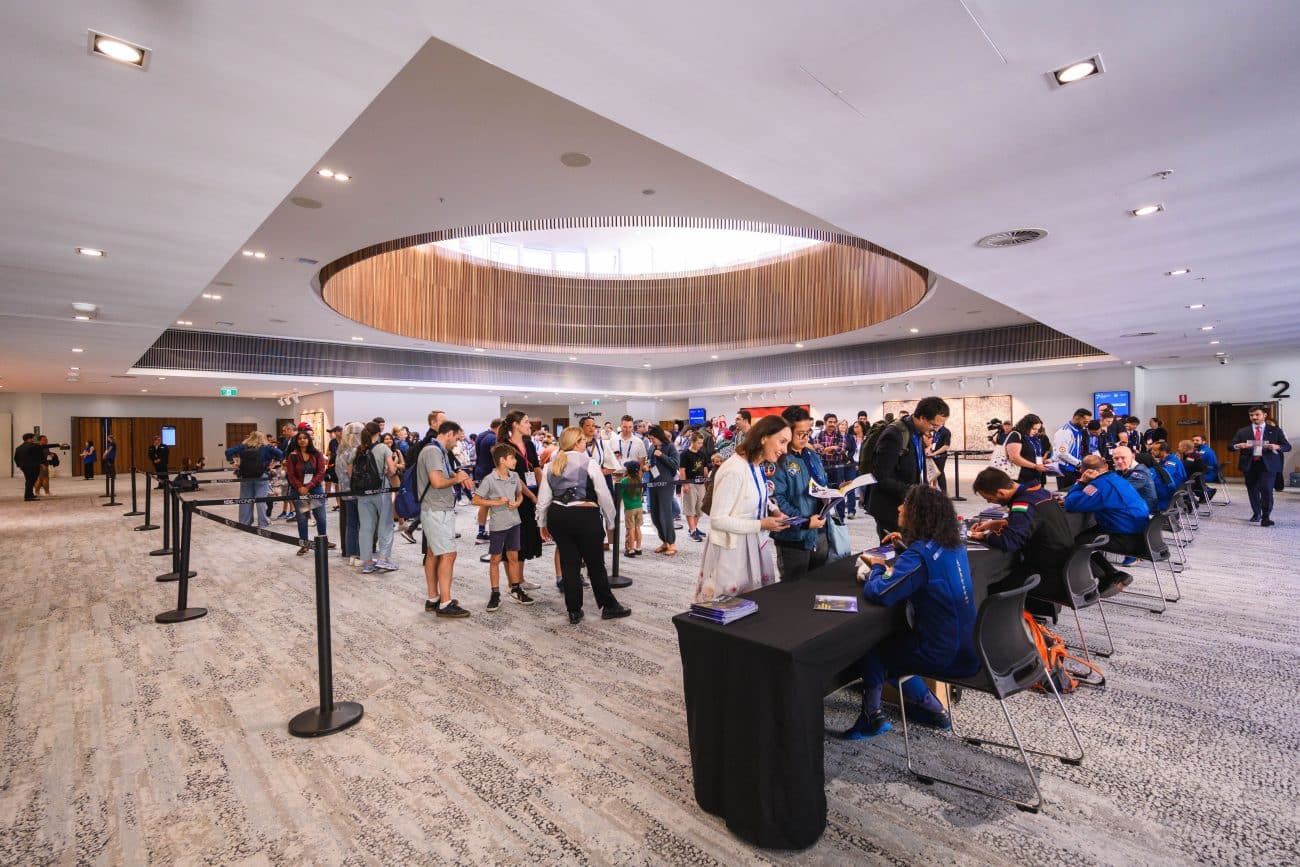
One of IAC 2025’s most visible extensions was Space Day – Powered by LEGO®, which drew more than 19,500 registrations. The public programme featured astronaut meet-and-greets, interactive displays, dedicated theatre sessions, STEM activities for children under 12 delivered by the Department of Education, and UNSW’s “Rover and Rockets” display, where children and young adults could discuss student projects with university representatives.
This public-facing dimension brought the congress closer to the local community. Families and students encountered space through people, objects, projects and activities rather than through abstract policy language. For a sector dependent on engineers, scientists, technicians, entrepreneurs and data specialists, such initiatives can help the sector advance among the young in the future.
Vitaris also connected the congress to broader values, saying it reinforced themes of “innovation and inclusion”, including a commitment to learning from Indigenous Peoples on the deployment and use of space technologies.
Security, media & sustainability
The profile of IAC 2025 required careful coordination across security and precinct management. ICC Sydney worked with NSW Police, government agencies, precinct authorities and event stakeholders to manage VIP arrivals, public demonstrations, media activity and the arrival of a rare lunar sample. High-level guests included ministers and NASA representatives, with ICC Sydney’s security team supporting movement through event zones.
Vitaris praised the “security overlay”, noting that it was executed “with precision and care”, and highlighted the way ICC Sydney worked with authorities to manage public demonstrations while maintaining safety and openness. Media engagement and onsite management was supported by the venue’s expert Communications and Audio Visual Services teams, including live television crosses.
ICC Sydney worked with the appointed professional conference organiser, MCI Australia, and international stand builders to manage waste, skip bin logistics and the return of exhibition materials where required.
In the end, the 76th International Astronautical Congress demonstrated how a major congress can serve several objectives at once. It convened an international scientific community, gave Australian and NSW space businesses global visibility, brought public audiences into the conversation, and tested a venue’s ability to manage scale, security, media, content and complex stakeholder expectations.