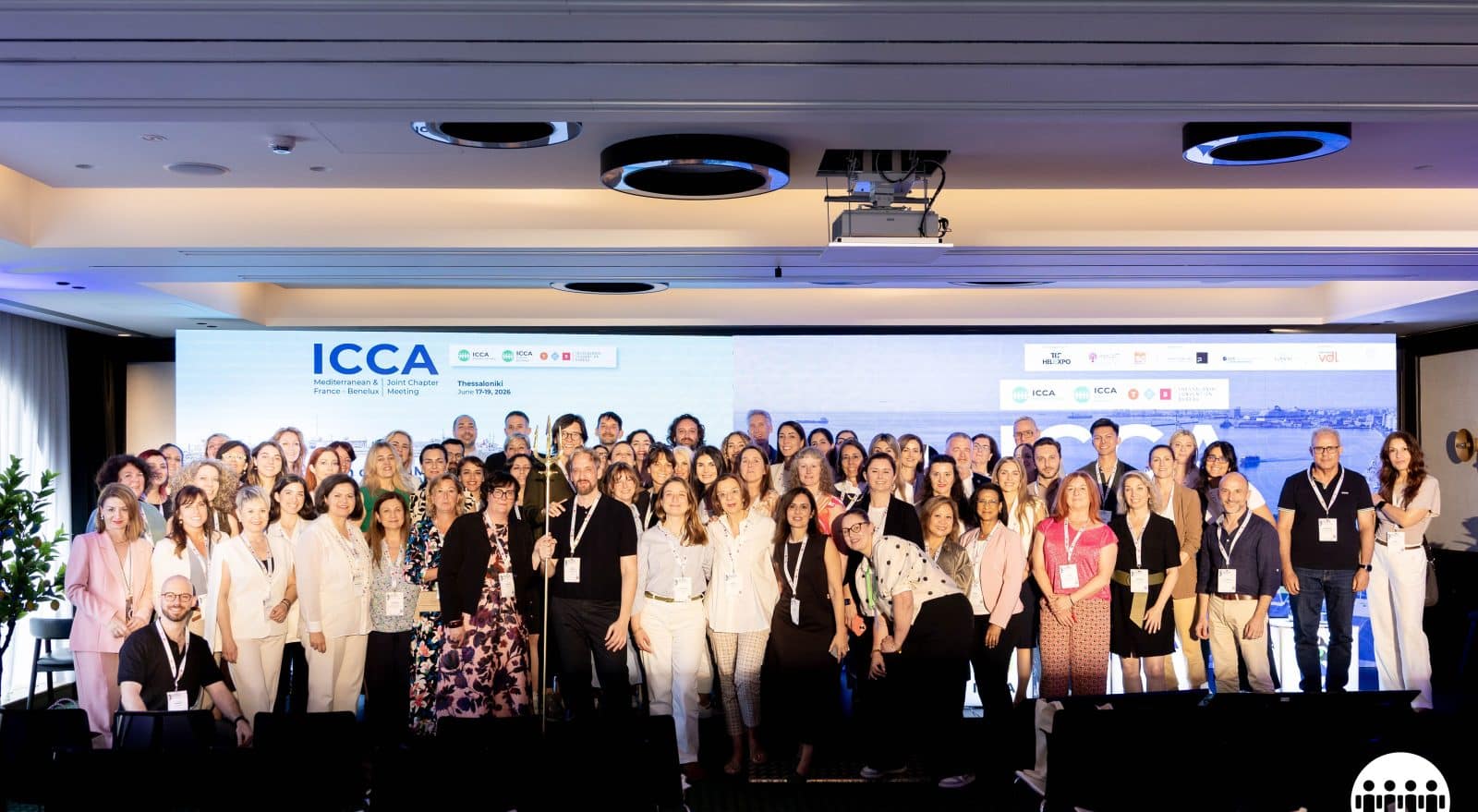
1. Collaboration as an operating model
The very first session of event set the tone and it did so without much patience for abstraction. Carlotta Ferrari, President of Convention Bureau Italia and General Manager of Fondazione Destination Florence, described Italy’s journey from fragmented, competitive chaos to a unified national convention bureau as an “act of faith”built on trust – a bottom-up process that nobody could mandate from above. Christoph Tessmar from Barcelona talked about the Mobile World Congress generating 600 million euros in economic impact and promptly triggering a local backlash: “Where’s my benefit?”, a stark reminder that scale without communication is not a success story, it’s a provocation.
What stayed with me is that every person on that panel had stopped treating collaboration as a nice principle and started treating it as an operational necessity. Dr Prodromos Monastiridis of Thessaloniki Convention Bureau put it plainly: “We don’t compete, we participate.” That’s a mindset shift, not a slogan. The Connecting Cities session that followed made the same argument through concrete platforms (the EU CVB Network, World PCO Alliance, the International Alliance for Impact, the Strategic Alliance of the National Convention Bureau of Europe…)- each one proving that the industry’s most interesting innovations are happening at the edges, in the spaces between organisations rather than within them.
2. Risk is not a specialist’s problem any longer
I moderated the Navigating the Storm session with Sissi Lignou and Steen Jakobsen, and I will admit I came in thinking I knew what the conversation would be. I was wrong about the depth of it. Sissi’s IAPCO Global Socio-Political Impact Survey numbers are staggering when you read them in sequence: 73% of respondents said global conflicts have affected their ability to plan or host international meetings. 65% experienced travel disruption. 40% reported a decreased willingness to travel. And nearly 60% said US government policies between 2025 and 2026 had already impacted their planning through 2028.
Sissi made the point that has since stuck with me the most: “The industry’s instinct in a crisis is often to wait, to see if it blows over. But the data tells us the crises are not blowing over. They are accumulating.” Steen’s Copenhagen Risk Navigator answered the same question from the other end: not the data, but the framework. The finding that 43% of associations still lack a formal risk strategy is damning. His advice was deceptively simple: start with your leadership team, name three or four realistic disruptions, clarify who makes what decision and when. The gap between risk awareness and risk action, he said, “is not a knowledge problem. It’s a governance problem.”
3. Associations are done being polite about what they need
The What Associations Really Want session was the most candid hour of the two days. The panel, representing a medical society, a sociological association, and a sports traumatology body, agreed on more than I expected. Post-COVID flexibility in contracts is now a baseline expectation, not a favour. Zhanna Kovalchuk of ESSKA was direct: “When things go wrong, we suffer together. I need a partner who understands that, not a contract that protects only one side.”
The line that I wrote down and underlined came from Dr. Cecilia Delgado-Molina, from the International Sociological Association: “Stop promising us the train that will be built. We only evaluate what exists today.” It was said with the particular patience of someone who has been burned by a future development that never materialised. Associations, the panel made clear, have professionalised. They have phased their RFP processes, set non-negotiable red lines around scientific independence, and started turning site visits into co-creation sessions rather than inspections. The destinations that haven’t noticed are at risk of falling behind without knowing why.
4. Legacy is meaningful when intentional
Across all four sessions, the word “legacy” came up more than any other – but what I noticed is that the most interesting speakers were the ones who immediately followed it with something concrete. The Bruges childhood disability conference whose programme was adopted in Galway. The congress in Barcelona where the community benefit question became a prompt for a genuine civic dialogue rather than a PR exercise. Leuven’s One Health programme as a model for embedding societal challenge into academic events.
Dr Cecilia Delgado-Molina, again, framed it with a clarity I found refreshing: “The congress should create something that didn’t exist before. If it doesn’t, we can do a webinar.” That’s a brutal standard, but it’s the right one. The industry has talked about impact and legacy long enough that the words have started to lose their edges. Thessaloniki reminded me that the way to sharpen them again is to demand specific stories, not ambitions.
5. The city is the point
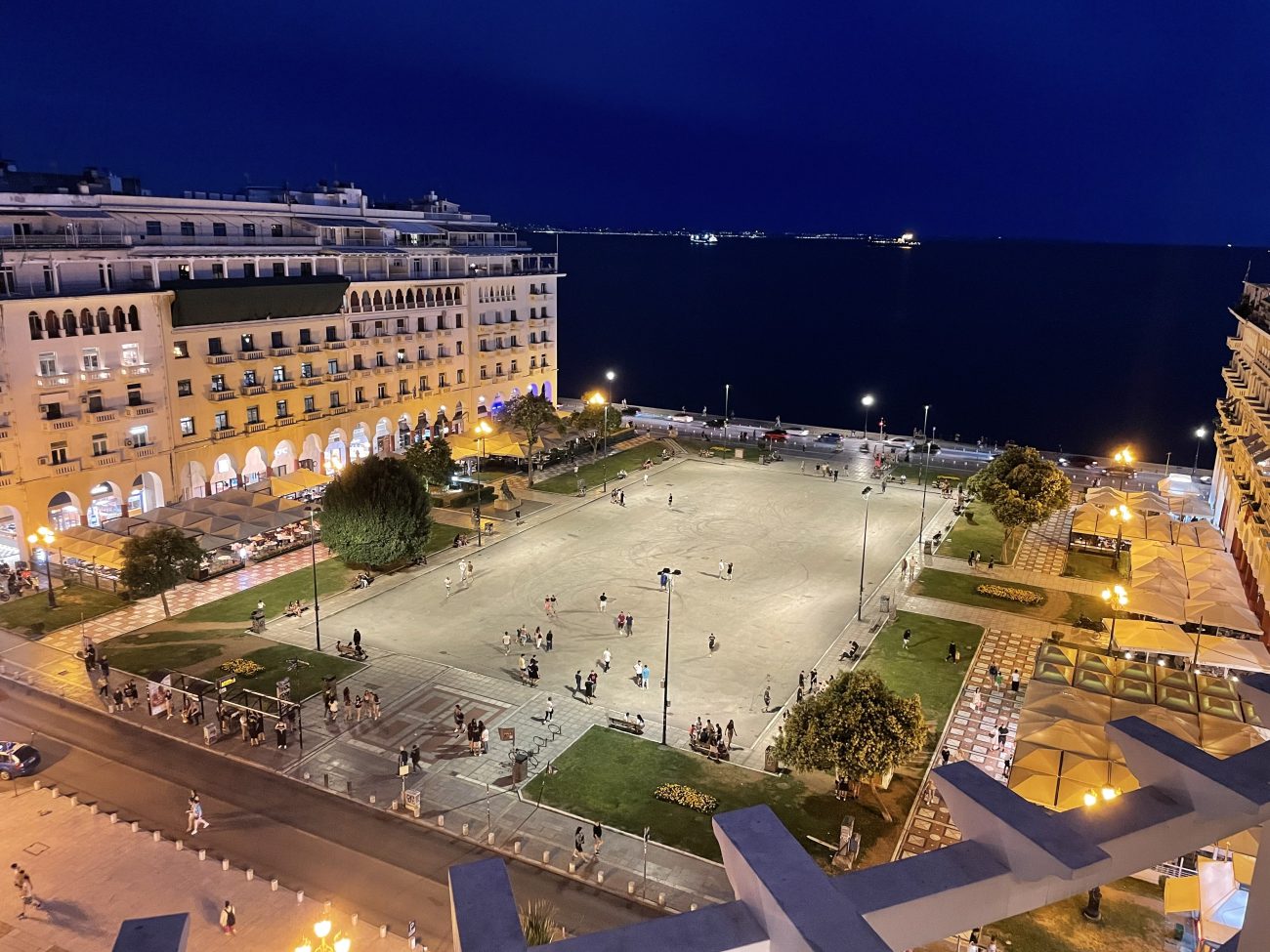
I don’t usually write extensively about the host city in a session report. But Thessaloniki earned it. The choice to hold a meeting about collaboration, second-tier cities, and destination identity in a city that is itself trying to step out of Athens’ shadow was not accidental, and it clearly worked. The rooftop reception at the Electra Palace, the boat soirée on the Thermaic Gulf, the Greek summer dinner close to the sea: these were the argument, made physically. Dimitris Ganitis and his team demonstrated, rather than simply claimed, that smaller cities can offer something that capitals cannot: approachability, intensity, and the particular energy of a place that feels genuinely glad you came.